Wrestling with Moses and Jacobs: Lessons for Philanthropy
IDEAS / Q & A – Phil Hall
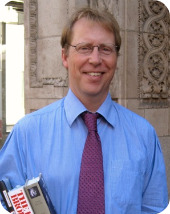 Robert Moses and Jane Jacobs stand as mythical figures in the history of urban planning and represent two sharply different approaches. Moses was a builder of epic proportions, whereas Jacobs was known for her preservationist work. Moses operated unilaterally, whereas Jacobs was rooted in community and organized successfully against two Moses projects. Moses was a great strategist. As an advocate of “organized complexity” Jacobs veered close to anarchy. These two giants helped to reshape urban life. Phil Hall of GMA Foundations explains what they might teach present-day philanthropy.
How did you become interested in Robert Moses and Jane Jacobs?
As a staff person for foundations working in cities, I have always been aware of these two figures. I have also been a fan of the obsessive chronicler Robert Caro since reading a New Yorker installment of his biography of Lyndon Johnson, the part dealing with Johnson’s tainted senate race against Coke Stevenson. Over the Christmas break I started out with Anthony Flint’s Wrestling with Moses and Jacobs and concluded that if I really wanted to get inside this subject I would have to tackle Caro’s great book on Moses, along with Jacobs’ own The Death and Life of Great American Cities, which changed the game plan for urban America.
What do Moses and Jacobs have to teach urban funders?
Maybe not much, maybe quite a bit. Paradoxically, whereas Moses and Jacobs were rooted in the real world, literally influencing the physical reality of New York and other cities, they were essentially creative artists, and as such were less constrained than the average program officer or foundation trustee by the great moral challenges posed by cities. They did not have to concentrate as much as most foundations do on income and opportunity inequality, or on people, really. Their approaches to life may also have something to teach us: Moses was a master of strategy, which seems to be a mantra for present-day giving, whereas Jacobs was more willing to take life as it comes, provided it met her own complex criteria for density and vitality. Finally, Jacobs was a keen observer of Boston, and her reports of the city of 40 or 50 years ago are revealing. Like New York, Boston had its Moses period, and she helped to end it.
Jacobs famously wrestled with Moses and won. Is that the end of the story?
I don’t think so. Leaving an art exhibition or a movie, most people experience a few moments of heightened awareness. A similar thing happened to me after reading these books: walking through Boston or any city, I began to see Moses elements and Jacobs elements everywhere I went. In Lowell I met Jeff Speck, a visiting consultant and the former director of design for the National Endowment of the Arts, a direct Jacobs descendant. MassINC recently ran a story on the Boston Redevelopment Authority, which summons in a benign way the ghost of Moses. But Jacobs didn’t necessarily win this battle, and Robert Moses wasn’t all bad. Eliot Spitzer (who, like Moses, has experienced his own fall from grace) suggested a revisionist epitaph for Moses might be “At Least He Got It Built.” Which he certainly did.
Click here for Phil’s review of three books, The Power Broker, by Robert Caro, The Death and Life of Great American Cities by Jane Jacobs, and Wrestling with Moses, by Anthony Flint.


