Funder Briefing: Violence and the Culture of Inner-City Boys
 The stronger a neighborhood’s social identity, the worse for boys.- Lawrence Harmon, “Deadly Streets,” Boston Globe, May 10, 2010
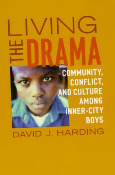
On August 2, GMA Foundations hosted a funders briefing with sociologist David Harding focused on his recent book, Living the Drama: Community, Conflict and Culture Among Inner-City Boys. The meeting was facilitated by Boston Globe columnist Lawrence Harmon.
Harding’s book is drawn from interviews with 60 black and Latino boys living in separate neighborhoods in Roxbury, Dorchester and Dorchester Lower Mills. The first two neighborhoods are classified as areas of concentrated poverty, with 40 percent or more of residents living at or below the federal poverty level. Dorchester Lower Mills is primarily working and middle class and served as a control group for the study.
Harding maintains that most of Boston’s youth violence can be traced to neighborhood allegiances and “beefs,” with neighborhoods frequently comprising no more than a few city blocks. Navigating between neighborhoods is dangerous, leading many young boys to band together and associate with older teens, who may or may not serve as good role models.
The riveting youth interviews do not paint an entirely negative picture. Boys from all three neighborhoods hold traditional views regarding the importance of school, delayed fatherhood and work. However, boys in the highest-risk neighborhoods are presented with a confusing “heterogeneity” of choices, which Harding believes can contribute to higher than acceptable rates of high school drop out and teen fatherhood. Additionally, the task of avoiding violence can be all-absorbing and can lead to lowered expectations for both teens and parents: in dangerous neighborhoods, avoiding injury and jail are accomplishments in their own right.
Bostonians are disposed to think well of their neighborhoods. Harding challenges the notion of neighborhood (it’s often much smaller than we think) and questions the importance of such public institutions as the schools (few of the Roxbury and Dorchester boys reported making friendships at their non-neighborhood high schools) and community-based nonprofits (salaried youth workers are viewed with skepticism). At the same time, he is supportive of interventions including street outreach, gun reduction, college guidance and placement programs and a longer school day.
Click on this link to David Harding’s interview with Boston Neighborhood Network. For Lawrence Harmon’s editorial on Harding’s book, click here.


